

Building generational wealth and securing financial stability is a common goal for many families in Australia. Whether aiming for personal financial freedom, providing for future generations, or creating a legacy, the best ways to build generational wealth require strategic planning, bold execution, and a resilient mindset.
There are practical tips, proven strategies, and timeless principles that can help you achieve your financial goals. From property investment strategies to family dynamics and organisational efficiency, you can learn the keys to sustainable wealth creation and generational success.
Jon, a business owner, has discovered the importance of maintaining a centred and growth mindset, focusing on buying quality assets to build generational wealth for his two children. To hear the ins and outs of his wealth creation journey, you can listen to the full podcast episode here.
Commercial property investments, while potentially lucrative, require careful planning and strategic decision-making due to their complexity. Compared to residential properties, commercial investments offer higher returns and longer lease agreements. However, integrating them into a broader investment strategy is essential for optimal outcomes and risk management.
When evaluating different investment strategies, especially in commercial property transactions, consider the risk-reward trade-offs and strike a balance between ambition and caution to maximise returns while mitigating potential risks.
Try to align your commercial property investment strategies with your future business growth plans. For instance, consider purchasing office buildings or commercial spaces that complement the expansion of your existing business operations.
Successful property investment for building generational wealth relies heavily on timing, taking advantage of market trends and economic cycles to enhance returns. Whether entering a booming market or seizing opportunities during a downturn, strategic timing is pivotal for investment success.
Recognising the importance of timing in your investment decisions, analyse market conditions and economic indicators to identify optimal moments for property investment. Develop a strategic plan for future growth and expansion, considering factors such as market demand, competition, and financial feasibility. Establish clear goals and checkpoints to track progress and adjust strategies as needed.
There is an importance of timing and seizing opportune moments in the property market to maximise your returns. This wealth creation strategy involves staying informed about market trends and being ready to act quickly when favourable investment opportunities present themselves. You can read more about conquering fear and procrastination when it comes to investing in property.
Engaging in consolidation phases allows you to channel your energy and resources towards strategic focus areas, and is one of the best ways to build wealth. Property investment requires a long-term perspective and an understanding that generational wealth building is gradual and repetitive. Sometimes wealth creation is about focusing on reducing your debt and optimising your existing assets rather than aggressively acquiring new properties.
This strategy involves temporarily pausing your portfolio expansion to strengthen the financial foundation and maximise returns on your current investments. During growth periods, prioritise consolidation to fortify your existing investments and business operations, avoiding spreading resources too thin with premature investments.
Avoid deviating from your core investment strategies and making impulsive decisions driven by short-term market fluctuations.With awareness and caution in your decision-making, avoid distractions like speculative ventures or fleeting trends to safeguard your portfolio against unnecessary risks and better optimise your wealth creation.
Family dynamics and financial planning intersect when creating your generational wealth and success. It’s crucial to integrate family dynamics into your financial planning, considering the long-term impact of building wealth on your children. Planning and foresight are key in preparing your family for generational wealth, securing financial stability, and passing down your wealth sustainably.
Address your immediate family needs while also balancing long-term financial goals. Make sure you provide good housing, education, healthcare, and other essentials first.
Teach your children about financial literacy and independence early on, empowering them with knowledge about budgeting, saving, investing, and entrepreneurship.
Instil in them principles of fiscal responsibility and careful money management, such as delayed gratification and avoiding debt. By fostering a family culture of financial literacy and shared values, you can create a lasting legacy of wealth for generations to come.
Cultivating a resilient and determined mindset is crucial for navigating the ups and downs of wealth creation.
By adopting a growth-oriented perspective and seeing setbacks as opportunities to learn and grow, you can better handle market volatility and position yourself for long-term generational wealth.
Embrace resilience and adaptability, and maintain a mindset focused on continuous learning and innovation throughout your wealth-building journey.
Efficient wealth management and growth rely on your in-depth record-keeping, budgeting, and tax planning. Prioritising your organisation can help streamline your financial processes.
Utilise technology and automation tools to simplify your administrative tasks and improve your decision-making, laying a solid foundation for sustained wealth building.
Also, surround yourself with experienced mentors, advisors, or financial professionals like our investment brokers who can provide valuable insights and guidance based on their wealth-building experiences and industry expertise. Learn from their client successes to accelerate your own journey towards generational wealth.
The best ways of building generational wealth through real estate wealth require strategic foresight, discipline, and a resilient mindset. As you embrace the challenge and opportunity of building generational wealth, remember that your actions today have the power to shape tomorrow.
Jon realised he needed to build assets that increased in value and provide a reliable cash flow for him and his family in the future, as well as finding the right professionals to work with to ensure he can continue to invest and grow his property portfolio.
If you are looking to do the same, then reach out to one of our investment brokers today. We can structure your investor home loan strategically and work collaboratively with you, your buyers agent, accountant and financial planner to structure your investment loan correctly from the beginning of your wealth creation journey.
Proptech (property technology) such as the Auction Snitch app is changing the real estate landscape by providing “hot off the press” property insights and benchmarking data crucial for informed decisions.
The real estate market can be unpredictable as it is influenced by factors like economic conditions and societal trends. For both buyers and sellers, this can be both daunting, but access to real estate data can give you clarity amongst the uncertainty.
The media extensively covers the real estate market in Australia, particularly focusing on aspects like auction clearance rates. Clearance rates reflect trends observed over the past months, providing insights into the property market’s performance.
These data-driven insights can empower you to work the real estate market with confidence, seize lucrative opportunities, and help mitigate risks like over paying for an auction property. Harnessing the power of proptech to decipher auction data, Auction Snitch can play a pivotal role in shaping the outcome of your property auctions.
Auction Snitch is an app designed for users to share real-time property prices and track sales campaign histories for properties of interest. With a pressing demand for increased transparency within the Australian real estate market, due to the absence of price guides on listings and delays in publishing auction results and sold prices, Auction Snitch gives you crowdsourced real estate data that will directly impact your property decisions.
To get the inside information, listen to the full podcast episode with Auction Snitch co-creators, Tamsin Lapointe and Tori Huxtable here.
Property buyers obviously do a lot of background work. Usually a lot of time, and often money, has been spent before turning up to an auction on a Saturday. You may have spent money on legal advice or pest and build and you start to live in this alternative world where you are living in this house – you’ve already worked out where the furniture can go, where the kids will go to school, how you’ll get to work.
There’s a lot of emotional capital spent on an auction property. If you aren’t successful at the first auction, that’s a big blow to your confidence and stress and disappointment.
Likewise with the seller, they are thinking, “does anyone walk our property? Are we going to get the price that the agents dangled in front of us?”
There is a lot of pressure and stress when it comes to the auction market and you don’t know how it’s all going to unfold and it can be a public disappointment or judgement when things don’t go your way.
Real estate market conditions can vary significantly from one locality to another, with factors such as supply and demand, infrastructure development, and employment opportunities having varying degrees of influence. Data can provide awareness of these market trends, property pricing and value, and emerging opportunities.
Various components of auction clearance rates, such as pre-auction sales, withdrawn listings, and passed-in properties, give you perception into how the real estate market is performing in any given area.
You’ve probably heard the horror stories – you inspect the property, do all your research, get finance ready and the Contract of Sale reviewed. The price guide is within your budget but then… the first bid is more than your total budget!
This happens at auctions all around the country. Every. Single. Weekend. Why is there no transparency?
Auctions are a common occurrence in the real estate market, offering an efficient platform for buying and selling properties. However, understanding auction metrics can be hard for new buyers or sellers.
Interpreting key auction data such as clearance rates, pre-auction sales, and withdrawn properties is essential for deciphering market trends, property value and ultimately, assessing investment or sale opportunities.
Clearance rates, which measure the percentage of properties sold at auction, are often cited as a key indicator of market sentiment. A high clearance rate indicates strong demand and competitive bidding, while a low clearance rate may signal subdued market conditions.
By analysing auction data, you can gain knowledge of the supply-demand dynamics, pricing trends, and competitive landscape within a given market segment. While auction clearance rates can offer some understanding of the real estate market, they are not entirely accurate and may not include all auctioned properties.
This is why the Auction Snitch app was created – for users to share the “Word on the Street” property prices with each other and to follow sales campaign histories for property listings of interest. Information that otherwise may not be public knowledge.
In the digital age, proptech has emerged as a powerful tool for buyers and sellers seeking to make informed decisions. The Auction Snitch app, leverages real estate data from property listings to provide its users with valuable clarity when checking an auction property. By synching with Domain listings, the app offers a comprehensive view of live auction results, recently sold properties, and listing details within your desired location.
The user-friendly interface of the Auction Snitch app streamlines the process of accessing critical information such as auction dates, price guides, and sales history. The app’s intuitive design allows you to quickly filter listings based on your preferences, whether it be property type, location, or price range. Features such as the sales campaign history provide you with a detailed overview of a property’s listing journey, including price guide revisions and eventual sale prices.
There is absolutely no substitute for doing your own homework. With Auction Snitch the average person on the street is able to come up to speed very quickly by doing some homework as to what properties are worth and what are the things to look out for.
Are auctions subject to finance? Are auctions legally binding? Can Auctioneers lie about bids?
But more importantly, how much did that property actually sell for at auction? This information is not readily available to the public.Transparency is paramount in the real estate market, empowering you to make informed real estate decisions.
Both buyers and sellers find themselves greatly frustrated due to the absence of price guides on listings, alongside the delays in publishing auction results and sold prices, which directly impact their property decisions.
The Auction Snitch app embodies this by democratising access to market information and fostering greater transparency in property transactions. By providing you with real-time data on auction outcomes, price guides, and sales history, the app equips you with the data you need to understand the market. Access to historical data also allows agents to analyse pricing strategies and market trends in specific areas, aiding in competitive intelligence.
Data drives transparency and efficiency in the real estate market. Through platforms like Auction Snitch, you can make smart decisions, whether you are buying, selling, or simply assessing investment opportunities. Ultimately, greater transparency fosters trust and confidence in the real estate market, benefiting all stakeholders involved.
As technology continues to evolve and disrupt traditional industries, the future of property investment holds immense promise. Proptech innovations such as real estate apps, data analytics, and artificial intelligence are reshaping the way many approach property investment. There is a lot of potential for future advancements in proptech, such as enhanced data analytics, predictive modelling, and interactive dashboards.
Looking ahead, the key to success in property investment lies in embracing technology and leveraging real estate data to inform your decision-making. By harnessing the power of proptech, you can gain a competitive edge in a rapidly evolving industry. Whether it’s identifying emerging trends, assessing investment risks, or optimising portfolio performance, data-driven strategies are the future of property investment.
Despite the benefits of proptech like Auction Snitch changing the real estate industry, there are also privacy concerns surrounding the public sharing of property transactions, particularly in instances where sensitive information is involved. However, transparency ultimately outweighs individual privacy concerns, as it fosters a more efficient and equitable market for all involved.
As property investment practices change and real estate market conditions shift, technology must adapt to meet the changing needs of buyers and sellers. Providing transparent market information benefits everyone involved. By embracing innovation and leveraging advanced tools such as the Auction Snitch app, you can stay ahead of the curve and make educated decisions in an increasingly competitive market.
Proptech platforms like the Auction Snitch app are revolutionising the way buyers and sellers approach real estate investment. By harnessing the information available through these platforms, you can gain a deeper understanding of market trends, pricing and property worth, and investment opportunities.
Even in this digital age, access to transparent auction information has become hard to come by. By leveraging proptech like Auction Snitch, you can mitigate risks, identify purchase and sale opportunities, and optimise your property portfolios for long-term success. As the real estate market continues to change, embracing proptech innovation and leveraging data will be essential to thrive in an increasingly competitive landscape.
If you are looking to buy a property at auction, download the Auction Snitch app for free and then chat to our home loan brokers. If you want to see how we use our auction expertise to help, you can read a real life case study here.
When learning how to add value to your property, success hinges on strategic decision-making and informed choices. Whether you’re a property investor or just wanting to increase the value of your own home, understanding the fundamentals of property valuation is super helpful.
You can add value to your property through identifying opportunities for improvement, optimising returns, and mitigating risks.
From location to renovations, Belinda Botzolis has a knack for identifying what can add to or decrease the value of your property. Don’t renovate, build or invest without talking to her first. You can learn to understand the local property market, use innovative renovation strategies, and leverage her expert insights.
With over 130,000 followers on TikTok, Belinda joined Aaron to share more of the tiny details that distinguish true property value from superficial appraisals and reveals the secrets behind a valuer’s role and decision-making.
If you want to listen to the full podcast episode, you can catch it here. From conducting market analysis to avoiding common mistakes in property selection, we give you guidance for increasing your property value the smart way.
Take it right back to the start of the property purchase process. Take control of the investment process and guide your buyer’s agent to align with your investment objectives and ensure your property will increase in value as time goes on.
While buyers’ agents can be helpful, avoid overreliance on them and take an active role in the property selection process by providing specific criteria and conducting your own research.
Provide clear guidelines and information to your buyers’ agent if you have one. Talk about your investment goals, property preferences, and selection criteria to ensure they find properties that align with your long term objectives.
But you’re paying them a lot of money to find you a property. You are in control. You can actively shape the property selection process based on a clear understanding of your own investment goals and market fundamentals.
Understand your local property market, including demand, demographics, economic factors and infrastructure developments, before planning renovations to ensure they align with market trends and needs. You need to strike a balance between renovation expenses and potential profitability as renovating doesn’t always add enough value to your house.
Prioritise profit margin when investing in property, considering factors such as renovation costs, potential appreciation, and resale value to maximise returns on investment. Sometimes you can spend $500,000 in renovations and add $700,000 in value…but you could have spent $150,000 and made $500,000 in profit.
Conduct thorough cost-benefit analysis to ensure that your renovation expenses align with your property’s potential appreciation. You may not get a really strong capital growth given the demographics of the people living in the area, because property is only worth what somebody is prepared to pay for it.
It’s like a Rubik’s Cube. You have to keep fiddling with your budget. You could spend more, and could sell for more, but the profit gap actually closes.
Renovations play a pivotal role in adding value to a home, but it’s crucial to invest strategically.
When renovating a home, especially for personal use, be mindful of overcapitalisation by considering whether the added value justifies the cost of renovations. If you are prepared to hustle for a dollar when being overcharged at the cafe down the road, take that mindset and hustle for the best value for money that you put into your home.
When it comes to your own home, it’s always about your end goal with this property. Is this your forever home? Or will you eventually sell it to move on to bigger and better things? Align your renovations with your long term property goals. If you’re renovating for an investment and you’re planning on selling later, then every cent is vital.
Envisioning your home as a “piggy bank for money” reinforces the need to assess renovation expenses carefully to maximise returns.
For investment property renovations, focus on strategic updates that maximise return on investment (ROI) while minimising costs. Prioritise house renovations that add significant value to the property, such as improving functionality, aesthetics, and market appeal, while avoiding unnecessary expenses.
In investment properties, prioritising high-value cosmetic renovations can give you the most substantial returns when selling. Strategic renovations that offer the biggest bang for your buck, include new floors, new kitchen, repainting, and changing the light fittings. Focus on renovations that enhance aesthetics and functionality without needing substantial structural modifications like moving walls and plumbing.
When it comes to investment properties, just make sure that you have a good, clean, safe, functional home for your tenant. Don’t go over the top!
In real estate, recent sales data holds significant weight in property valuation. Recent sales in your area within the past six months, within a similar range of 10-15%, can influence your property valuation. When seeking a property valuation, providing evidence of recent sales in your area can be beneficial, although it may not be the sole determinant of valuation.
If you have sales evidence that you want to present to the valuer, they should be open to accepting it. Providing evidence to support property valuation enhances credibility and helps ensure a fair assessment. Understanding market trends and analysing recent sales can provide valuable insights into property values, but that doesn’t mean that they will use that as gospel in their reports.
If you want more tips on preparing for a home valuation, we have you covered!
Increasing your property value requires a combination of strategic decision-making, market awareness, and active involvement in the value-add process. From conducting thorough market research to prioritising profit margins, take a comprehensive approach to increasing your property value.
If you would like to learn more about how to add value to your property or gain house renovation ideas, you can follow Belinda on Instagram or TikTok, or have a valuation done on your property by the expert herself.
Thinking of renovation to increase the value of your home? Whether you’re eyeing a complete home overhaul, a specific room upgrade, or even contemplating multiple phased renovations, the renovation loan experts at Atelier Wealth mortgage brokers are here for you at every step.
Property sentiment reports play a critical role in the real estate industry, offering valuable insights into market trends, investor sentiment, and future outlooks. The Australian property market is driven by sentiment.
Sentiment, in the context of the property market (or any other financial market), refers to the overall attitude or feeling of investors, buyers, or participants towards a particular asset, market, or economic conditions. Sentiment encompasses perceptions, emotions, and beliefs that influence your decision-making processes.
Is it a good time to buy? Should I buy my own home or buy an investment property? Where should I buy an investment property? What type of property should I be purchasing?
These are just some of the questions unpacked in the Australian Property Investor Magazine’s Property Sentiment Report, compiled by editor, Craig Francis. For investors looking to make informed decisions in the property market, understanding these reports is key.
If you want to hear Craig unpack the changing priorities of property investors and spotlight emerging regional markets, offering a glimpse into the future of property investing in Australia, you can listen to the full podcast episode here.
Property sentiment reports are comprehensive analyses of the real estate market that provide insights into property investment patterns. These reports typically include data on market trends, investor attitudes, economic indicators, and forecasts for future market conditions.
By compiling and analysing this data, property sentiment reports aim to offer a comprehensive overview of the current state of the property market and provide you guidance on potential opportunities and risks.
Property sentiment reports, such as the Australian Property Investor Magazine’s Property Sentiment Report, are invaluable decision-making tools for investors in the real estate market.
By providing insights into market conditions and investor sentiment, these reports help you make informed decisions about when, where, and how to invest in property.
Property sentiment reports also play an important part in risk management, allowing you to assess the potential risks associated with your investment decisions and make adjustments accordingly.
Australian Property Investor Magazine’s property sentiment reports are compiled using survey responses provided by their readers. Surveys are often conducted among real estate professionals, investors, and other stakeholders to gauge their sentiments and expectations regarding the property market.
Once the data is collected, it undergoes thorough analysis to generate insights and trends. Statistical analysis, trend analysis, and comparative analysis are common methods used to interpret the data and identify patterns and trends in the property market.
Property sentiment reports often include key metrics and indicators that provide valuable insights into the property market.
The Australian Property Investor Magazine’s Property Sentiment Report for Q4 2023 gives valuable insights into Australian property investment trends, investor sentiments, and emerging opportunities across Australia’s property landscape.
The Australian Property Investor Magazine’s full Property Sentiment Report Q4 2023 can be downloaded here.
Western Australia has become a prominent player in the Australian property market, particularly Perth, which has seen a remarkable surge in dwelling values, up by 15.2% in 2023.
This growth has attracted both investors and potential migrants seeking promising investment opportunities and more affordable entry points into the market. With forecasts predicting further price increases, Perth is increasingly appealing to investors looking for lucrative returns.
The demand is so high that properties are being snapped up by interstate buyers even before locals have a chance to consider them. The low supply of properties has led to soaring rent prices, further fueling investor interest as they seek high rental yields and capital growth. However, there is a caveat – Perth’s property market is closely tied to mining commodity prices, and a rapid drop could quickly end its momentum.
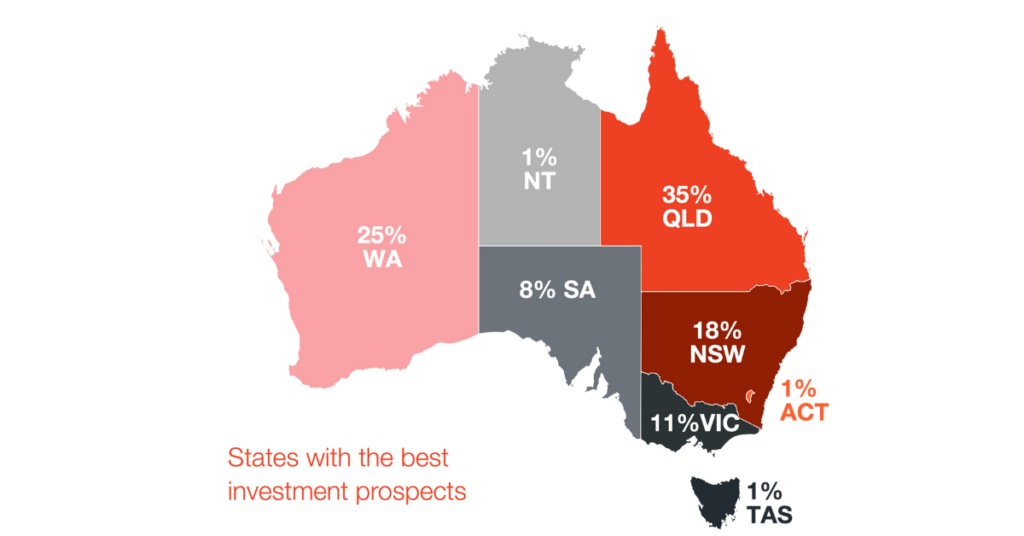
Queensland remains a top choice for property investors, especially Brisbane, which saw a solid annual property growth rate of 13.1% in 2023. More people are recognising Queensland as a prime investment opportunity, boosting confidence in its market. With Brisbane’s strong performance and promising regional markets, investors can expect significant returns in the years ahead.
Investor sentiment is shifting noticeably towards long-term investment strategies, which is a significant change from previous trends. This shift highlights the importance of careful and forward-thinking investment strategies that align with your long-term financial goals. The data shows a substantial increase in the proportion of Australian investors prioritising retirement planning, from just 5% to nearly 19% in the past year.
This trend is particularly interesting given that the Australian Property Investor Magazine’s readership predominantly consists of young adults aged 25 to 44 which suggests a growing awareness of superannuation and long-term financial planning among younger demographics, despite the current challenges of high interest rates and affordability issues.
Interest rates remain a significant concern for both buyers and sellers, shaping the property market’s overall sentiment. Although there are predictions of potential interest rate decreases, there is still concern about how rate hikes could affect loan affordability and property prices.
If interest rates were to rise significantly, it might lead to an excess of properties for sale and put downward pressure on prices. This proves the importance of staying vigilant and planning strategically, especially in the changing interest rate environment.
The Q4 2023 report highlights a clear trend of buyer interest outweighing seller intent, with more respondents expressing a desire to buy property in the next 12 months compared to those looking to sell. Despite high interest rates and inflation levels, buyer sentiment remains strong, indicating resilience despite the current financial challenges.
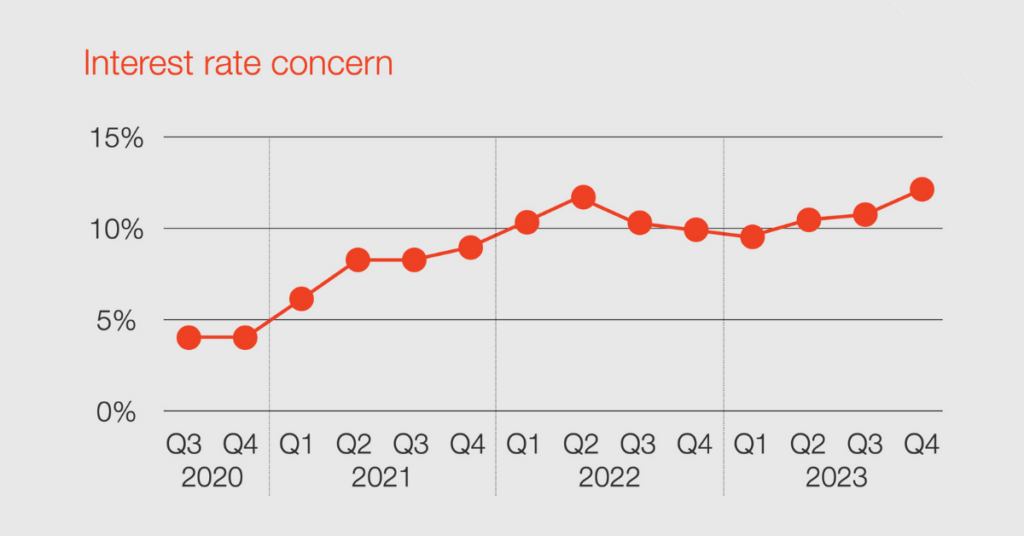
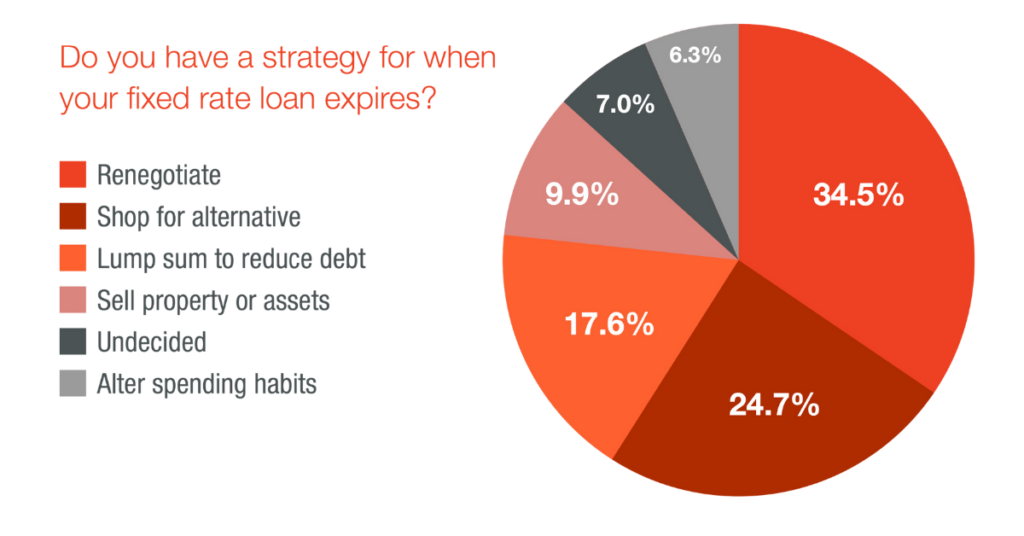
Despite the high interest rates, there are signs that mortgage stress levels are slightly easing, thanks to factors like stabilising rates and high rental yields. Homeowners and investors are using strategies like refinancing to overcome the challenges of the end of low fixed-rate loans.
Record levels of refinancing in recent years, with 60% of survey respondents considering refinancing after transitioning from lower fixed rates to higher variable rates, have significant implications for banks and the economy overall. Although mortgage and rental stress remain factors (more than a third of investors say they are experiencing some), the sentiment in the property market remains positive, largely driven by rising property prices and ongoing supply issues.
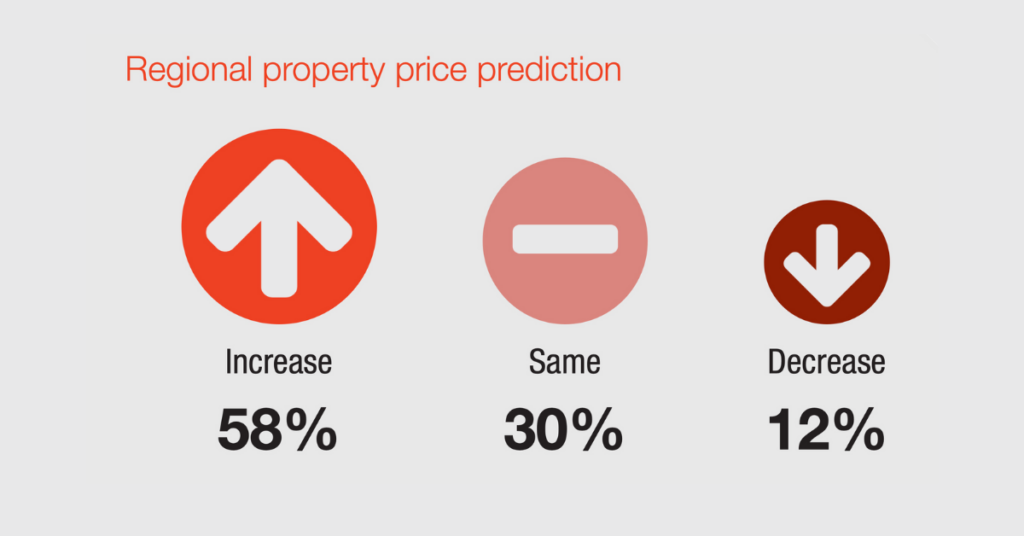
While capital cities continue to outperform regional areas in property price growth, there’s a noticeable shift towards wanting to buy houses, possibly due to their historically stronger capital growth performance and the increasing appeal of buying in the outer suburbs. For instance, Armadale, a less gentrified suburb in Perth, saw a remarkable 50% increase in prices.
Here are some tips to help effectively leverage property sentiment reports.
Established in 1997, Australian Property Investor Magazine is one of Australia’s leading property information brands. They are passionate about protecting the interests of their audience of investors, homebuyers and property professionals through best in market property education, information and research. They provide a rich source of breaking news, analysis, and feature articles on all aspects of the property sector.
By understanding how their sentiment reports are compiled, interpreting the key metrics and indicators, and using them effectively in investment decision-making, you can further understand the Australian property market. You can also tap into their Australian property investment knowledge for free by subscribing to their weekly newsletter.
If you would like to get the ball rolling on an investment property, reach out to an investment loan expert here at Atelier Wealth Mortgage Brokers. No matter what stage of the investment process you’re in, we can assist you.
Fear can hold you back as a potential property investor – fear that you’ve missed the boat, fear you don’t have enough deposit to get in, fear of not knowing if you have the right team and property investment strategy to build a thriving property portfolio. Procrastination brought on by fear is a common issue that affects many potential property investors.
It’s the act of delaying or postponing tasks despite knowing there may be negative consequences associated with the delay. In property investment, this kind of fearful hesitation can be particularly detrimental, as it often leads to missed opportunities and stunted portfolio growth.
The longer you leave it, the harder it gets to go and to start a property investment strategy.
By understanding your fear and procrastination and implementing effective property investment strategies, you can take practical steps toward achieving your property investment goals.
If you want to hear Jason Titus share his journey from having $32,000 in savings to buying four properties within 2.5 years and now having an investment property portfolio valued at $1.9m, you can find the full podcast episode here.
Property investment fear can manifest in various forms, from hesitating to make a purchase decision on a property to putting off conducting thorough market research. It’s a behaviour rooted in the avoidance of discomfort or anxiety associated with taking action. Despite knowing the importance of taking prompt action, you can often rationalise your inaction with excuses or distractions.
Several factors contribute to procrastination among potential property investors. Often it’s your fear of failure or making incorrect investment decisions, leading you to delay committing to a particular property or market.
If you look at the median house increase over 2023 across Australia but particularly in Sydney, it can increase $1,500 to $2,000 each week. So on top of paying your rent or mortgage, there’s no way you’re saving $1000-$2000 a week just to keep up with the compounding increase in house prices in Sydney.
If you’re not in the market, you’re falling behind as well. You can see all the talk of property prices stalling or falling hasn’t eventuated.
With low supply on housing builds, increasing migration numbers, and statutory tax cuts this year with potential rate cuts in the future, the odds are stacked in favour of house prices continuing to increase in 2024. All the economic metrics are leaning towards a strong year in property as well. Now is the time to take action.
A lack of clarity or uncertainty about investment opportunities can worry you, preventing you from taking action.
How does buying an investment property with equity work?
This simple property investment strategy of buying below market in a high growth location and then snowballing deposits is a repeatable, scalable investment model. You can read a real life case study of Atelier Wealth clients who used this property investment strategy and found great success in buying an investment property with equity.
The consequences of procrastination in property investment are more than just the delays in decision-making. The longer you over analyse your property investment strategy, the greater the risk. By delaying investment actions, you may find yourself priced out of desirable markets or unable to capitalise on favourable market conditions.
Hesitation can also result in missed rental income opportunities and reduced potential for capital appreciation. Over time, the compounding effects of inaction can hinder your portfolio performance and diminish your long-term wealth-building chances.
If Jason was to give himself some advice back before he started investing, it would be to get ready. There’s lots of opportunities coming, just to get mentally prepared and let go of fear.
Clarity is key when setting investment goals. By defining clear and measurable objectives, you can gain a sense of direction and purpose, reducing the likelihood of putting off taking the next step.
Large investment goals can also feel overwhelming, so break them down into smaller, actionable tasks and make them more approachable.
Having someone to share progress with and hold you accountable can be highly motivating. Whether it’s a mentor like Sam or Jason from Australian Property Scout, a fellow investor, or friend, having someone to provide support and encouragement can help combat your fearful internal dialogue.
Deadlines also create a sense of urgency and help maintain momentum. Breaking your goals into smaller milestones with associated deadlines ensures your progress is measurable and keeps you focused on your goal of buying an investment property.
Fear of failure or perfectionism can paralyse you when it comes to buying an investment property. By identifying and addressing these underlying fears or limiting beliefs, you can move forward with more confidence.
Perfectionism often leads to inaction as you wait for the perfect investment opportunity or solution. Embracing the risk of imperfection and recognising that progress is more important than perfection can help you take meaningful action.
Waiting for the perfect moment can result in missed opportunities. Instead, adopt a mindset of action and make decisions promptly. Taking action, even a slightly imperfect action, is often better than inaction when it comes to buying an investment property.
Overcoming procrastination requires momentum. Start with small, manageable tasks to build confidence and momentum. As progress is made, confidence grows, making it easier to tackle larger challenges. You can find more tips for overcoming your fear of buying an investment property here.
In the fast-paced world of property investment, overcoming fear and procrastination is essential for your success.
From setting clear goals and creating accountability to managing your fear and perfectionism, each step plays a role in combating your hesitation and driving property investment progress.
Remember, the path to success is paved with consistent action and perseverance. As you start your investment journey, keep these strategies in mind, stay focused on your goals, and never underestimate the power of persistent effort. In the podcast episode, it’s clear that by taking action and making decisions, Jason and his family are in a much stronger financial position now.
If you want to stop letting fear get in the way of embracing property investment strategies like Jason’s, then find out how to begin by reaching out to an investment loan expert here at Atelier Wealth Mortgage Brokers or get in touch with a mentor at Australian Property Scout.
In today’s bustling real estate market, the great Aussie dream of buying the perfect property can often feel like searching for a needle in a haystack, but is investing extra money into a buyer’s agent worth it?
With skyrocketing prices, fierce competition, and so many options to consider, buying your dream home or investment property can be intimidating. It seems all property buyers are more despondent than ever and homeownership levels have dropped to the lowest levels in three decades. But while it may seem like pretty tough going out there, you should understand there are many more finance options for home or investment buyers today than 30 years ago. So, when is the best time to buy? Well, the best time to buy is when you’re ready.
But the most important thing is don’t try and do it by yourself. First things first, meet with your mortgage broker and run different finance scenarios to get an idea of exactly what your budget is. This is the best starting point but then it may be worth engaging a buyer’s agent – a professional dedicated to representing your best interests as a property buyer throughout the purchasing process.
Unlike traditional real estate agents who primarily work on behalf of sellers, buyer’s agents work exclusively for buyers, offering you expert guidance, strategic advice, and support from property search to settlement.
By leveraging a buyer’s agent’s expertise and industry connections, you can empower yourself to tackle the competitive property market with confidence. But not everyone can afford to engage a buyer’s agent, so we asked Ramon Cura from Cura Property to share his secrets. With decades of experience under his belt and buying thousands of properties, Ramon shares some of his insider tips here.
Having a buyer’s agent on your side can be a total game-changer and absolutely worth every penny. From gaining access to exclusive listings to negotiating better purchase terms, buyer’s agents can streamline the buying process and get you the best outcome.
A buyer’s agent can help you put together a brief of what you want from the property you are looking to buy. What are the must haves? What are the nice to haves? Where are you willing to compromise?
It really boils down to ‘why are you here and what is it that you’re wanting to achieve?’.
By first going through the process of getting your pre-approval, or at least advice from your mortgage broker about what you can spend, you gain confidence about what you can and can’t buy.
Your buyer’s agent then acts as your dedicated advocate and helps to identify, evaluate, and secure suitable properties that align with your preferences and budget.
Buyer’s agents have intimate knowledge of local market trends, property values, and negotiation strategies and prioritise your best interests, offering unbiased advice and personalised assistance every step of the way and this is why you may need one.
One of the biggest benefits of having a buyer’s agent is gaining access to their insider knowledge and expertise. Buyer’s agents often have access to off-market listings, local market insights, and professional networks that can give you a competitive advantage.
Whether it’s identifying emerging neighbourhoods, evaluating an investment property’s potential, or uncovering hidden gems that align with your criteria, you can streamline your property search and find opportunities that may not be readily available to the average buyer.
The next part of the process is to do the property search which can be the hardest part, especially if you have specific requirements or preferences. Buyer’s agents act as your personal property concierge, scouring the market to identify properties that meet your criteria, assessing their suitability, and presenting you with a curated selection of potential property purchases.
Whether you’re seeking a waterfront apartment, a suburban family home, or a high-yield investment property, buyer’s agents can save you time, effort, and frustration and allow you a clear head to make smart decisions. You don’t want to just pick something to make the stress go away!
Negotiation is one of the key elements of the property buying process, and having a skilled negotiator in your corner can make all the difference in securing yourself a favourable deal.
Buyer’s agents have negotiation skills honed through years of industry experience, allowing them to advocate for your interests, leverage market conditions, and negotiate purchase terms that align with your goals.
Whether it’s negotiating price, terms, or inclusions, buyer’s agents work to secure the best possible outcome for you while shielding you from the stress and pressure of direct discussions.
If you work with a good buyer’s agent, you will walk away with the knowledge that you have gone through the right processes and have the right property at the right price.
From the initial property inspection to the final settlement, the property buying process can be pretty scary, especially if you are a first-time buyer.
Buyer’s agents provide you guidance and support at every stage of the process, answering your questions, and clarifying the process to ensure a smooth and seamless experience.
A purchasing method that is often avoided by nervous buyers is buying at auction. If you are hesitant or concerned about going to an auction, find a buyer’s agent and speak to them. Ramon gives the tip of waiting for the bidding to slow down, before coming in with your first bid. This can throw the remaining bidders off, and also gets the crowd rallying behind you.
Whether you’re learning about auction bidding strategies, conducting due diligence, or coordinating inspections and paperwork, buyer’s agents are your trusted advisor.
Choosing your mortgage broker and buyer’s agents carefully is worthwhile, because if you get the right one, they will grow with you and be by your side for life. Look for buyer’s agents who specialise in your target area, have positive client testimonials, and demonstrate a deep understanding of local market dynamics.
Ask about things such as their experience, areas of expertise, client approach, and fee structure. Use this to gauge their communication style, professionalism, and ability to understand and prioritise your needs.
Pay close attention to their credentials, qualifications, and industry experience. Look for agents who are licensed, accredited, and affiliated with reputable industry organisations such as the Real Estate Buyers Agents Association of Australia (REBAA).
From gaining access to exclusive listings to leveraging expert negotiation skills, buyer’s agents offer a range of benefits that can streamline your property search and maximise your buying potential.
Whether you’re a first-time homebuyer, a seasoned investor, or a relocating professional, partnering with an Atelier mortgage broker and a buyer’s agent can be the key to unlocking your property dreams.
If you know a buyer’s agent is going to be worth it, reach out to Ramon from Cura Property to discuss your needs and explore how they can assist you in securing the perfect property in Sydney. With their expertise and dedication on your side, you’ll be well-equipped to enter the competitive property market with confidence and achieve your goals.
A strata inspection report can be your saving grace when it comes to buying property. Whether for investment or commercial purposes or as your personal home, making a property purchase can be an intensely emotional journey. The excitement and anticipation make it easy to rush through the process and overlook important details.
Working with an independent licensed strata manager who can get you a strata inspection report allows you to look at your potential purchase objectively and present the hard facts you need to make a fully informed decision.
Strata expert Craig Baylis, from Coastal Strata (a property investor himself who has also delivered over 10,000 strata reports to his clients) joined our latest podcast episode and shared his valuable insights from over two decades of experience, helping you avoid costly mistakes when it comes to strata schemes.
Strata schemes, often referred to as body corporates or owners’ groups, are commonly found in multi-unit complexes where owners own their individual parts of the property such as a retail store or a residential apartment but share common areas like gardens, carparks, driveways, and gyms. Owners pay a regular body corporate fee to cover the upkeep of these common areas and other costs that might occur.
They can be small complexes with few amenities that are easy to maintain. Large strata complexes typically have a range of amenities, such as swimming pools, gyms, and lifts, which enhance your experience as an owner or tenant but tend to have higher maintenance or body corporate fees. Complexes like this often operate like big businesses, with significant budgets and complex management structures to handle the required maintenance tasks and administrative duties.
Strata reports offer you a comprehensive look at the property’s financial and legal aspects and the overall condition of the strata scheme.
Licensed strata managers assist you as a potential buyer by providing comprehensive strata reports. They understand property bylaws and sift through extensive data, strata records and information that isn’t evident during your inspections. They don’t give you advice but provide factual information and point out potential risks that you could be facing which are vital for informed decision-making.
The strata report outlines the financial status of the strata scheme, providing details on the administrative fund, which covers the property’s every day running costs, and the capital works fund (previously called a ‘sinking fund’), which is like a savings account for major maintenance in the future or unexpected emergencies. It will show if the strata scheme has done routine and preventative maintenance and are raising enough money to cover the upkeep.
Appointed strata managers will look for cases where the owners aren’t raising enough money or spending more than they’re receiving, ultimately increasing levies or body corporate fees and resulting in additional costs for the owners.
Details of past and planned maintenance or repair work on the common property can indicate how well the property is being maintained and if there are any significant upcoming expenses.
It will also give you an idea of any impact upcoming maintenance will have on you or your tenant and the extent of the disruption it may cause.
The strata inspection report outlines information on the body corporate’s specific by-laws (rules), which can include regulations for tenants on pet ownership, renovations, noise levels, and other aspects of living in a communal environment.
For example, when renovating an apartment, you must understand what parts are considered common property, for example your front door. Any changes to these areas require approval from the strata committee or owners’ group since they affect more than just your own unit.
Some internal changes can directly impact common property elements. For instance, renovating your bathroom often involves messing with waterproofing and tiling. It is typically classified as common property because these aspects are integral to the building’s structure and integrity and must be done according to stipulated requirements.
You should carefully consider the body corporate’s by-laws—the rules governing what’s allowed in your building, before buying. Some buildings already have by-laws permitting particular renovations, while others might require seeking specific approval.
If you do buy and want to do some renovations, it’s best to plan your renovations transparently and seek all the necessary approvals upfront to ensure everything aligns with the strata scheme’s rules. This way, you avoid any legal or structural headaches down the line, ensuring your renovations enhance your home or business without stepping on any toes.
Short-term rentals such as Airbnb are subject to varying regulations across complexes in Australia. The regulations are determined by a combination of state laws, strata by-laws, and local council policies. Each strata complex may have its unique set of regulations regarding short-term rentals, which are established by the owners’ group. It is essential to familiarise yourself with these regulations if you plan to use your property for short-term rentals, as they can significantly impact your plans.
Besides the strata rules, you’ve got to look at the bigger picture, including state and local council regulations. State policies might give you broad guidance, but the nitty-gritty details can change depending on local council rules, meaning what’s permitted in one area might not be in another area.
If you’re considering a strata property for short-term rental terms, make sure to involve an expert who can help you understand the strata’s by-laws and the local council’s requirements to avoid legal headaches or future disappointment.
In addition, strata inspection reports also cover information on any current or past legal disputes involving the owner’s corporation that could impact your buying decision, the meeting minutes if anything noteworthy came up, and whether the complex has adequate insurance.
You might want to know if you have noisy neighbours that often get complaints or any disputes between tenants before you buy. Sometimes the drama is not worth it!
Overlooking details in a strata inspection report may not seem like a big deal until you get hit with a special levy or an unexpected cost to fix something in the complex.
Having a professional strata expert like Craig and the Coastal Strata crew get you a strata report on a potential purchase means you have all the support you need to make your strata purchase work perfectly. It will also help you avoid any costly surprises!
Whether you are buying a unit as an investment or your home, you absolutely need to avoid the body corporate mistakes often made by unprepared buyers.
If you want to listen to the podcast that this post is based on with Aaron and Craig, you can catch it here.
Our Founder, Aaron Christie-David, is redefining success in the mortgage broking industry with a focus on cultivating an abundance mindset. Through his recent appearance at the Always Be Connecting podcast produced by Storytellers Australia, Aaron highlights the crucial role of building deep, meaningful relationships in achieving both personal and business success.
Building Meaningful Connections
Over the past seven years, Aaron has demonstrated the transformative power of authentic connections in growing Atelier Wealth. His approach goes beyond mere transactions:
Embracing Collaboration
A key pillar of Aaron’s philosophy in fostering an abundance mindset is collaboration, favouring cooperation over competition to uplift the entire industry.
Championing Diversity and Inclusion
Aaron addresses the critical need for diversity and inclusion within our sector, ensuring that our services reflect and cater to the multifaceted needs of Australia’s diverse population.
Prioritising Effective Communication
At the core of Aaron’s success is his commitment to excellent communication, recognizing its role in strengthening relationships.
Trinity Matt seemed destined for a career in law. Fresh out of high school, she landed a job assisting with wills, estates, and property law at a law firm. After four years, she moved into a specialist role in conveyancing at another firm to gain more focused experience.
With graduation nearing, Trinity hit a crossroads. Though she enjoyed helping clients, something didn’t feel quite right about being a conveyancer long-term. She wanted more variety, more human connection, more freedom. On a whim, Trinity applied for a client services role at a mortgage broking firm called Atelier Wealth. It turned out to be exactly the change she needed.
After just one year as a mortgage broker, Trinity has an expanded perspective on home loans. “I really thought that I knew a lot. Then I realised that I don’t. I knew a very, very tiny piece of the puzzle,” she shares. Mortgage broking involves weighing countless variables to create loan structures customised for each client. Trinity loves this critical, creative thinking. Conveyancing felt mundane by comparison.
Shadowing brokers in client meetings, Trinity gains insight into human behaviour during stressful transactions. Relinquishing control doesn’t come naturally, even to the most experienced buyers. “It’s what you have to do,” Trinity advises clients. Particularly with time-sensitive deals, she explains, letting the experts handle negotiations behind the scenes leads to the best outcome.
Trinity also notices knowledge gaps, especially among first-time buyers. Basic financial concepts like loan types, offset accounts, and repayments confuse many clients. She reminds them, “Do a little bit of research, get some understanding behind you.” A few hours of self-education prepares buyers to have informed discussions with brokers.
While Trinity acknowledges room for improvement industry-wide, she remains “an advocate for mortgage brokers.” Mediocre service from her own broker while purchasing property made joining Atelier’s “high standard” team especially meaningful. She aims to provide the kind of guidance to clients that she wishes she had.
After discussing her relationship in Atelier’s July 2023 podcast, Trinity returned with big news – she and her long-term boyfriend Aiden are newly engaged! Wedding planning began instantly, with a ceremony timed for early 2024.
Outside of work and wedding prep, Trinity is living her best life. “I don’t think I have a free second,” she laughs. Her enthusiastic zest for activity comes through clearly on frequent social media updates. Trinity fills spare moments with travel, lively social gatherings, and passion projects like developing an online course for first-time home buyers.
Trinity acknowledges this boundless energy occasionally becomes a fault. “I feel like if I had one thing going at once, I wouldn’t get anything done.” Still in her mid-twenties, she thrives on stimulation. “I need like 10 things going.”
The couple recently made an empowering decision to stop waiting for the “right” time to take their first overseas vacation. In 2024, they will explore America, financed partially through an equity release loan. Trinity muses, “It’s an opportunity cost.” Temporary setbacks pave the way for lifelong memories.
With so much personal and professional growth crammed into a short time, Trinity feels called to pay her good fortune forward. She aspires to guide others on their path to stability and freedom through home ownership.
Trinity notices female first-time buyers in particular feeling intimidated about navigating mortgage applications independently. She is slowly outlining her vision for a tailored education program, meeting this demographic where they are.
“How to Buy Your First Home Course” will cover buying essentials in straightforward language. Topics range from saving for deposits to comparing loan products and entitlements. Trinity doesn’t pretend to have all the answers. Her goal is to equip the next generation with enough knowledge to ask brokers well-informed questions.
By pooling collective experiences, Trinity believes no one should feel lost in the process. “I just want one person” to buy thanks to the course, she says humbly. But with her ambitious nature, that ripple impact will undoubtedly swell far beyond a single success story.
At just 24 years old, Trinity Matts’ exciting career pivot is opening doors to fulfilment in work and play. She demonstrates firsthand that the path leading toward dreams rarely follows a straight line. With fearlessness, passion, and support from those who love you, the most rewarding destinations lie just past the crossroads.
Trin’s journey is a roadmap for anyone considering a career change, hungry for financial literacy, or simply wanting to navigate the sometimes-daunting world of homeownership. Here’s your chance to:
The Australian housing market has seen its fair share of ups and downs over the past few years. With the pandemic leading to surging demand in 2020-2021 and declining affordability due to rising interest rates in 2022-2023, it has been a rollercoaster for home buyers and investors.
This comprehensive guide analyses the latest housing market data and trends across Australian cities and regional areas. We’ve also included our Australian housing market predictions, as to where property prices could be heading in 2024 and beyond!
The Covid-19 pandemic in early 2020 led to major shifts in Australia’s property market. With international borders closing and people spending more time at home, the demand for housing skyrocketed surprisingly. Record-low interest rates and government incentives like HomeBuilder grants further fueled this frenzy.
According to CoreLogic home value indexes, Sydney saw a peak annual growth of 28.6% in March 2021, while Melbourne witnessed a 21.3% yearly jump in the same month. Even smaller capital cities like Adelaide (18.4%) and Brisbane (18.2%) posted double-digit growth rates at their peak.
Several factors drove this unprecedented price growth across metro and regional Australian real estate:
The most sought-after property types that led to the price boom were houses, which saw much stronger demand growth than units, especially those on larger land plots. Coastal lifestyle markets were also immensely popular with city dwellers looking to relocate.
Overall, the Australian housing market went through a remarkable surge during 2020-2021, achieving the fastest annual growth rate since the late 1980s.
While the Australian property market remained red-hot for most of 2021, the winds started shifting towards the end of the year. As the economy reopened and life returned to normal, the frenzied buying activity cooled down, leading to more moderate growth.
Then, in 2022, the RBA began its rate hike cycle to tackle soaring inflation – taking the cash rate from an emergency low of 0.1% to a decade high of 3.1% within 7 months. This led to mortgage rates almost doubling from 2020 lows.
As per the latest CoreLogic Hedonic Home Value Index results, here were the annual growth rates in November 2022:
The boom years were behind most cities, although Brisbane and Adelaide continued to see solid price increases. And the once unbeatable Hobart market recorded its first annual decline since 2019.
Among other factors, shrinking borrowing capacities and slackening investor activity were responsible for the broad housing market slowdown. As buyers held back, sales volumes and clearance rates dropped across most cities.
Given the record mortgage rate hikes in 2022, all eyes were on how the Australian property market would fare in 2023. Consensus expectations were that house prices would moderate or even fall in some cities.
But that hasn’t quite played out so far this year. As per the latest PropTrack Home Price Index, Australian property values have continued to show resilience – recording a 5.4% yearly rise nationally in November 2023.
In particular, capital city real estate has powered ahead with a 6.5% annual jump compared to just 2.6% growth in regional markets. Sydney (8.4%), Melbourne (6.6%), Adelaide (9.1%) and Perth (6.2%) have all seen solid price increases over the past year.
Brisbane has been the star performer again in 2023 – with its property market expanding by 12.4% annually. Strong interstate migration and infrastructure spending continue powering Queensland’s capital.
On the other hand, Canberra witnessed a meagre 1.4% growth over the last 12 months. After leading price declines in 2022, Hobart was again the worst-performing market in 2023 – with median values falling by 6.5% year-on-year.
While property analysts have marvelled at the continued price strength, some pockets are showing signs of slowing down. Outer suburban areas that boomed during Covid, like the NSW Central Coast and Queensland’s Gold Coast, have seen values shrinking recently.
Among factors that kept the housing market resilient so far in 2023 have been:
So, there seems to be enough underlying demand by owner-occupiers, especially in the more affordable segments, to counterbalance the slide in investor activity. But will 2024 bring more heat to Australian real estate?
There are always risks when gazing into the property crystal ball. But based on current leading indicators, here is what we can expect in 2024:
Interest Rates While the RBA has signalled further hikes early next year, market consensus is that the cash rate could peak around 3.6% – before cuts resume in 2024. As inflation continues easing and the economy slows, RBA may need to support growth.
So mortgage rates could hover around their current levels for 2024 before declining mildly towards year-end. This should reprieve home buyers after 2 years of surging borrowing costs.
Supply-Demand Imbalance Australia’s chronic undersupply of dwellings, especially houses, is expected to continue next year. With population growth outpacing construction and more properties being held off-market, listings will remain tight.
This persistent shortage, especially in the largest cities like Sydney and Melbourne, means buyer competition will stay strong in the affordable segments. So well-located houses priced appropriately should still see decent demand.
Investor Activity Higher rents and positive rental yields will attract more investors back to the market in 2024. But their overall share of housing finance may not return to pre-2021 highs just yet.
With moderating mortgage rates, however, investment property buying is expected to gather some lost momentum next year. Rising rents will improve yields following the erosion of the last few years.
Price Forecasts Given the above trends, most experts predict property price changes to remain muted in 2024 – ranging between -5% to +5% across major markets. The era of double-digit growth is certainly over for now.
Markets with structural undersupply, like Sydney and Melbourne, could see mild growth if their economies stay resilient. Brisbane, Adelaide, and Perth may continue outpacing other capitals.
But expensive markets like Canberra and Hobart could witness further 5-10% declines until their affordability and rental yields regain balance.
Among houses, well-located family homes are expected to hold value better than units and off-plan apartments. Regional markets could track slightly behind capital cities depending on local economic factors.
So, while Australian housing may not boom like during COVID-19, a steady population rise means a prolonged crash remains unlikely. Targeted government policies around boosting new housing supply will also play a key role.
For Australians struggling with sky-high property prices, the big question is – which areas are still somewhat affordable to buy real estate in?
Here are some of the most budget-friendly suburbs within capital cities and regional areas:
While these affordable areas come with their locational tradeoffs, some regions also offer good lifestyle benefits like proximity to beaches and amenities. Savvy buyers can secure good deals, especially for houses, in these lower-priced markets.
To summarise, here are the key likely trends in Australia’s property market for 2024:
While 2023 surprised many with the resilience of Australian real estate, growth rates are settling at more sustainable levels. Property remains largely unaffordable for average income households, especially in the biggest cities.
But steadier conditions after the boom-bust swings during Covid should bring some stability. The market looks set for at least a few years of mid-single-digit price changes as supply-demand dynamics evolve.